
Fetching…
Fetching…
Bench Test · 12 min read
£2,800 new, dozens appearing used. We spent a month with the Go2 Pro to answer the only question that matters.
By Robot AutoTrader Bench Team · 24 April 2026 · Unit bought at retail
Astonishing hardware in search of a job: brilliant for developers, educators and content creators; a costly toy for everyone else. Used prices are falling — buy on battery health and joint noise.
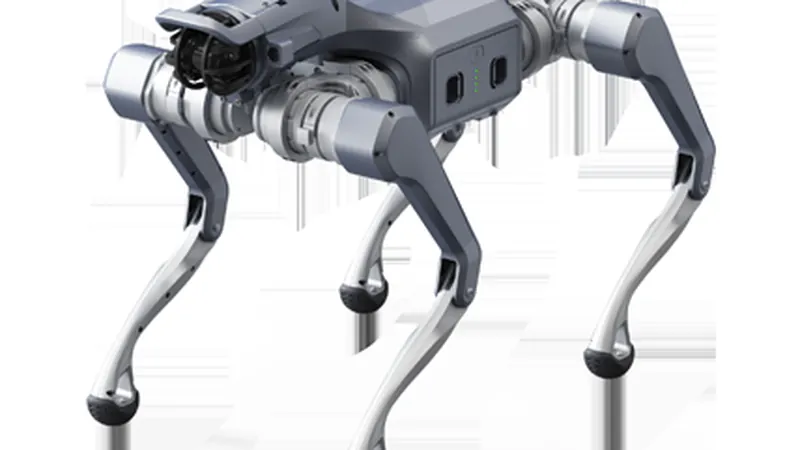
Thirty-one days, 47 charge cycles, one genuinely alarmed postman. The Unitree Go2 Pro is the most impressive piece of hardware we have ever had on the bench, and also the hardest to recommend. It trots at a measured 3.4 m/s, climbs our test staircase four times out of five, and streams telemetry over an SDK that responds faster than most people's broadband. What it does not do, at any point, is anything useful. That is not a flaw in the robot; it is the honest state of the quadruped category in 2026, and it is exactly what a used buyer needs to understand before parting with two thousand pounds.
So the score of 8.2 comes with an asterisk the size of the robot itself. If you write code, teach robotics, or make videos, the Go2 Pro is a bargain even at the £2,800 list price — it is a research platform that cost six figures five years ago. If you are anyone else, it is a costly toy with a novelty half-life we measured at roughly eleven days. The good news for the second group who buy one anyway: the used market is softening fast, with clean examples now trading at £1,700–£2,100. Buy on battery health and joint noise — our checklist is in section 7 — and the depreciation has largely been paid by someone else's boredom.
A month of daily use split between our 94 m² test home, a gravel yard, a public park (with permission we did not strictly need but the council seemed pleased to be asked), and the bench. Speed runs were GPS-logged over a measured 50 m grass strip; battery figures are full-charge-to-cutoff under continuous locomotion at 16°C; stair testing used a standard UK domestic flight (13 steps, 190 mm rise, carpeted); latency was measured command-to-actuation with a high-speed camera.
| Top speed (50 m grass, GPS-logged) | 3.7 m/s claimed | 3.4 m/s measured |
|---|---|---|
| Battery, walk gait (continuous) | ~120 min claimed | 104 min measured |
| Battery, trot gait (continuous) | — | 58 min measured |
| Stair climb (13-step domestic flight) | Supported | 16/20 ascents, 19/20 descents |
| Outdoor terrain (grass, gravel, 15° slope) | Supported | Zero falls in 22 sessions; 2 recoverable stumbles on wet gravel |
| Control latency, app vs. SDK | — | App 210 ms; SDK over Ethernet 14 ms |
| Noise at 1 m, trot on hard floor | — | 63 dB (a loud dishwasher with ambitions) |
Developers first, because they are who this machine is actually for. The Pro tier unlocks the full SDK — low-level joint control, LiDAR point clouds, ROS 2 support that mostly works on the first try — and our measured 14 ms command latency over Ethernet makes it a legitimate platform for locomotion and SLAM research. Five years ago this capability meant a Boston Dynamics Spot and a £60,000 purchase order with a university letterhead. Today it is £2,800 retail and falling used. If your work involves the words 'gait policy' or 'reinforcement learning', stop reading and go check the listings.
Education is the second honest answer. We loaned the Go2 to a sixth-form robotics club for an afternoon and learned more about its pedagogical value in three hours than in three weeks of bench testing. Sixteen students, one robot, total silence except typing. A quadruped that students can program, break (in software — the hardware shrugged off everything), and watch respond is worth a term of slides. Departments buying used should insist on the Pro model specifically; the base Go2's locked-down SDK removes most of the point.
Content creation is the third, and we say this without judgement: the Go2 Pro is an extraordinary camera subject. It earned more engagement in one park outing than our entire vacuum test archive has managed in a year. The onboard 1080p camera is mediocre — film the robot, not from it — but as a prop, a character, or a walking thumbnail, it pays for itself if content is genuinely your trade. If 'content creator' is aspirational rather than occupational, see section 6.
The rhythm of ownership settles quickly. The 8,000 mAh battery charges from flat in 109 minutes on the supplied charger, which sounds fine until you realise a trot-heavy session drains it in under an hour — serious users will want a second battery at £320, and used listings that include one deserve a premium. Firmware updates arrived twice during our month, one of which visibly improved stair descent and one of which changed nothing we could measure but renamed three menus in the app. The app itself is serviceable and slightly translated; every owner we spoke to had abandoned it for the SDK within a fortnight, which tells you who actually keeps these machines.
Then there is the social dimension, which no spec sheet covers. Our Labrador, veteran of 341 Roomba runs, took four days to accept the Go2 and never fully forgave the trot gait. The terrier filed a formal complaint on day one and maintained it throughout. Neighbours divided cleanly into two camps — those who wanted a demonstration and those who wanted assurances — at almost exactly 50/50, and the 63 dB trot on pavement announces the robot well before it turns the corner. Walking it in public is a commitment: budget twenty minutes of conversation per thirty minutes of exercise. Whether that ratio is a cost or a benefit depends entirely on why you bought it, which brings us back to the central question.
Twelve months ago a used Go2 Pro barely undercut list price. Today £1,700–£2,100 buys a clean example, and the listings tell you why: 'used twice', 'as new', 'partner says it goes'. The supply side is bored early adopters — people who bought the answer to a question they had not asked, discovered the eleven-day novelty curve for themselves, and are now recycling their capital into whatever is next. Their loss is quite literally your discount, and these barely-used units are the best buys in the category: single-digit charge cycles, no actuator wear, original box.
The second pressure is greyer. A meaningful share of UK listings are China-market imports bought £400–£600 cheaper through freight forwarders, and the warranty reality on those is stark: Unitree's official UK support will not touch them, the firmware ships in Chinese (switchable, mostly), and any actuator repair means a courier to Hangzhou and a six-week wait. Nothing wrong with the hardware — it is the identical robot — but an import should be priced £400 below an official UK unit, and frequently is not. Check the serial with Unitree support before you pay; it takes one email and sellers of official stock will happily oblige. Sellers who deflect have answered the question anyway.
How we fund this: Bench Test units are bought at retail. If you buy a new robot through outbound retailer links we may earn an affiliate commission; it never affects scores, and used listings on Robot AutoTrader carry no commission in this phase.