
Fetching…
Fetching…
Market contextConsumer drones are a ~US$6bn market; desktop 3D printing is growing at 17–24% a year. Enthusiasts upgrade constantly — last year's model is this year's bargain.
Hobbyist and drone robots have the most active resale culture in all of robotics. Enthusiasts upgrade frequently — DJI releases a new Mini or Air series annually, and Bambu Lab's 3D printer cadence is even faster. This creates a steady flow of nearly-new machines onto the secondhand market at significant discounts. The DJI Mini 4 Pro that cost £759 new eighteen months ago is a credible buy at £440 to £570 today.
The critical check on drones is the gimbal. Ask for a short video of the drone initialising — the gimbal should sweep cleanly through its axes and hold stable while the body is tilted. Any jitter, axis drop, or banding in footage indicates a ribbon cable fault: a £80 to £150 repair that makes an otherwise good drone a frustrating ownership experience. Battery cycle count (visible in the DJI Fly app) matters too — under 50 cycles is near-new.
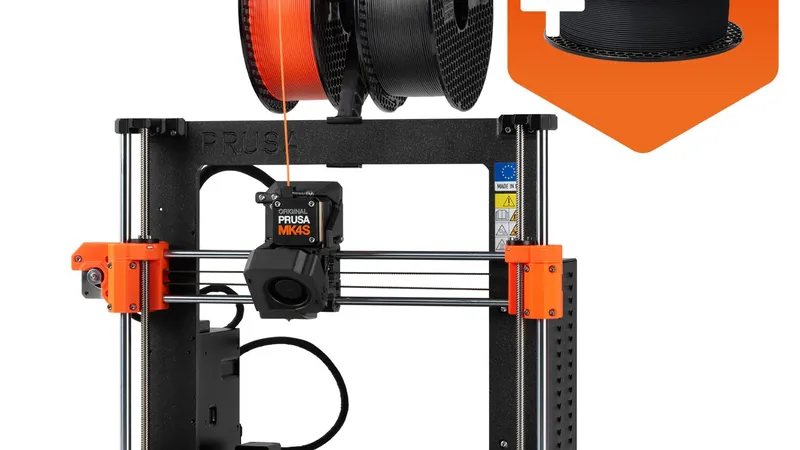
For 3D printers, print hours are less important than maintenance history. A Prusa MK4 at 2,000 hours with documented nozzle changes and a clean PEI build plate is a better buy than a 400-hour machine that has never been serviced. Ask for a recent benchy print as proof of print quality. The Prusa vs Bambu Lab question — reliability and open-source versus speed and engineering materials — is the most common decision in this category.
 Used · Excellent
Camera drone · Richmond, London
 Used · Like new
Camera drone · Cambridge
 Used · Good
Camera drone · Sheffield
 Used · Good
FPV drone · Bristol
 Used · Excellent
3D printer · Edinburgh
 Used · Good
3D printer · Hull
 Used · Excellent
Educational robot · Oxford
 Used · Excellent
Companion robot · Camden, London
9.0Bench Test
No flyer ID, omnidirectional sensing, 4K/60. We flew 22 missions to find the catch. There isn't much of one.
8 min read
9.3Bench Test
The MK4's pitch is reliability. We logged every failed print across 820 hours to test it. There were four.
9 min read
A used DJI Mini 4 Pro typically sells for £440–£570 in the UK, compared to a retail price of £759. Batteries with under 50 cycles and a complete kit including ND filters will be at the top of that range. Batteries with 100+ cycles or a gimbal that shows any axis jitter should be priced at the lower end or lower still.
Ask for a short video of the drone initialising — the gimbal should sweep cleanly through its axes and hold stable while the body is tilted. Any jitter, axis drop, or banding in footage indicates a ribbon cable fault (£80–£150 repair). Check battery cycle count in the DJI Fly app — under 50 is near-new, over 100 means you should factor in replacement cost of £60–£90 per battery.
No. The seller's CAA Flyer ID and Operator ID are personal registrations that cannot be transferred. When you buy a used drone, you must register your own credentials with the CAA. The seller should unlink their DJI account from the drone before you collect it — ask them to confirm this in writing.
Both are excellent used purchases if you know what to check. For the Prusa MK4, ask for total print hours via Settings → Statistics and a recent benchy print. The Bambu Lab P1S is faster but harder to service; inspect the AMS unit carefully for filament jams. A well-maintained Prusa at 2,000 hours is often a better buy than an unmaintained Bambu at 500 hours.