
!The Lupin Dental supervised autonomous veneer robot
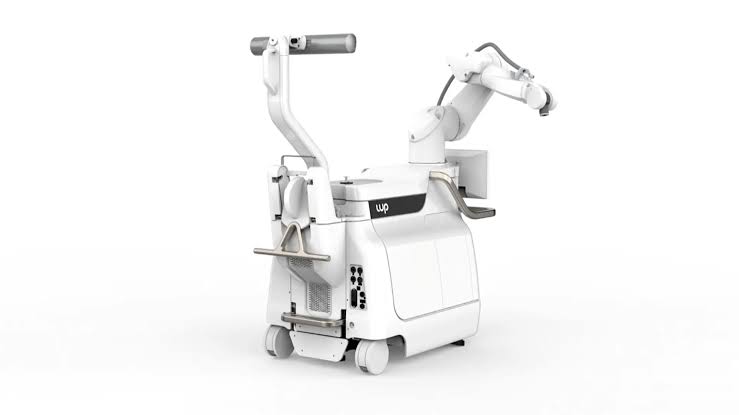
There is a moment in modern dentistry that requires extraordinary precision and is, simultaneously, entirely unremarkable to watch. A dentist brings a high-speed handpiece to a patient's tooth and removes a thin layer of enamel, typically between 0.3 and 0.5 millimetres, to create a smooth bonding surface for a porcelain laminate veneer. It takes minutes, it happens in dental chairs across the UK every working day, and it is one of the procedures in medicine most likely to be transformed by a robot within the next decade.
That transformation is already happening. In Montpellier, in the south of France, a company called Lupin Dental has built an autonomous robotic system that performs this precise enamel preparation while the dentist sits nearby, monitoring a screen. The handpiece moves without a human hand guiding it. The grinding path is pre-planned from a digital scan. And the accuracy is, by any clinical standard, remarkable: published studies show mean deviations of around 0.06 millimetres against a target depth, compared to 0.15 millimetres or more for manual technique.
In India, the system has already treated patients at Bharati Hospital in Pune. In August 2026, Lupin Dental closed a €15 million Series A funding round to scale the technology into the UK and across Europe. The company's robot holds regulatory approval in both markets.
This is not a research prototype. It is a commercially deployed autonomous surgical robot operating in human mouths. And it has, until very recently, been almost invisible outside specialist circles.
---
Why Teeth Are Hard
To understand why Lupin Dental's achievement matters, it helps to understand why tooth preparation is so difficult to automate.
The oral cavity is one of the most challenging environments in which any robot could be asked to operate. The working space is extremely confined. The target, living enamel, is brittle and varies in thickness by fractions of a millimetre across different teeth and different patients. The tissue immediately below enamel, dentine, is sensitive and porous, and inadvertent exposure causes pain and raises the risk of long-term complications. Patient movement, even the unconscious micro-movements of swallowing or tensing, can displace a target surface by several millimetres from where the robot expects it to be.
Manual veneer preparation, even in skilled hands, is inherently variable. The dentist must remove enough enamel to seat the veneer flush with the surrounding tooth surface, but not so much that they breach the enamel-dentine junction or create an uneven bonding bed that affects how the veneer seats. Doing this consistently across multiple teeth in a single appointment, under time pressure and with a patient who may be anxious, is genuinely difficult. Research has consistently shown that even experienced clinicians produce significant variation in preparation depth, with consequences for the final aesthetic result and for the long-term survival of the restoration.
Robots do not get tired. They do not have bad days. And once a preparation path has been digitally planned and validated, a robotic system will execute it with the same accuracy on the twelfth tooth of the afternoon as on the first of the morning.
---
What Lupin Dental Actually Built
The Lupin Dental system is described by the company as a "supervised automated" robotic platform, and that framing is important. This is not a fully autonomous robot making independent clinical decisions. The workflow involves a dentist taking an intraoral scan of the patient's teeth, planning the preparation digitally to define the exact path and depth of enamel removal, and then supervising as the robot executes the plan. The dentist retains control and can intervene at any point.
This architecture is a deliberate regulatory and clinical choice. Fully autonomous medical devices face a much more demanding approval path than supervised systems, in which a qualified clinician remains responsible for the outcome. By keeping the dentist in the supervisory loop, Lupin Dental was able to obtain regulatory clearance in India and the UK without needing to demonstrate fully autonomous clinical decision-making to regulators. The dentist approves the plan; the robot executes it.
What the robot brings to this workflow is the ability to execute that approved plan with mechanical precision that no human hand can match consistently. The system uses real-time tracking to compensate for patient movement during the procedure, updating the position of the handpiece relative to the target surface in ways that a human operator, working by eye and tactile feedback alone, cannot replicate.
Published clinical and laboratory data supports the accuracy claims. An in vitro study published in a peer-reviewed journal found that automated robotic preparation for porcelain laminate veneers achieved mean surface deviations well below those of manual preparation, with more consistent depth across the preparation area. The clinical cases completed at Bharati Hospital have extended these findings into actual patient treatment.
---
The India Chapter
The choice to conduct first-in-human cases in India was not accidental. India has a substantial and growing dental implant and cosmetic dentistry sector, combined with a regulatory environment that, for novel medical devices backed by robust clinical data, can move faster than the European CE marking or UK UKCA pathways for the same technology.
Bharati Hospital in Pune is a major teaching hospital with an established clinical research infrastructure, and the partnership gave Lupin Dental the ability to conduct supervised clinical cases under ethical oversight while building the dataset needed for broader regulatory submissions. The cases completed in Pune were the foundation on which the UK regulatory approval was built.
For patients in India who received robotic veneer preparation, the clinical experience was, by design, almost indistinguishable from conventional treatment. They sat in a dental chair. A dentist took a scan of their teeth and explained the planned preparation. The robot was positioned, the procedure completed, and the preparation verified. The difference was that the grinding was done by a machine rather than a hand, and that the depth of enamel removal was more precisely controlled than is achievable by manual technique.
---
The €15 Million Round and What It Buys
In August 2026, Lupin Dental announced the close of a €15 million Series A round led by Fynveur. The round had been described in coverage on EU-Startups and TechFundingNews as the capital needed to move from clinical validation to commercial deployment at scale.
What that capital is actually buying is the infrastructure of commercialisation: manufacturing capacity for more units, the sales and clinical training teams needed to equip dental practices, and the regulatory work needed to complete the US pathway (where the Food and Drug Administration's clearance process for novel dental devices is considerably more demanding than the routes the company has already navigated in India and the UK).
For the UK market specifically, the timing is notable. The UK government has made expanding NHS dental capacity a public commitment, and while robotic veneer preparation is an aesthetic rather than restorative procedure and therefore not directly NHS-funded, the broader interest in technology that can improve the throughput and consistency of dental procedures is real. UK private dental chains, some of which now operate at significant scale, are precisely the kind of early adopter that can deploy a novel clinical technology across multiple sites quickly, generating the real-world performance data that supports subsequent wider adoption.
The system also plays into a trend that is very visible across the broader robotics sector: the gradual movement of robotic systems from industrial and logistics settings into direct patient contact. Readers who follow the robot database will know that surgical and medical robotics is one of the fastest-growing deployment categories, even if most of the public attention falls on the humanoid robots and autonomous vehicles that dominate news coverage.
---
Accuracy in Numbers
The published research on robotic tooth preparation deserves closer examination, because the numbers are striking.
In laminate veneer preparation, the target enamel removal is typically 0.3 to 0.5 mm. Staying within that range matters enormously. Remove too little, and the veneer will be over-contoured, sitting proud of the tooth surface, which affects both aesthetics and bite function. Remove too much, and you risk breaching into dentine, exposing the patient to sensitivity, compromising the long-term bond strength of the veneer, and potentially necessitating more invasive future treatment.
Clinical studies of manual veneer preparation consistently show mean deviations in depth that range from around 0.1 mm on the better end to 0.3 mm or more. Given that the entire target removal depth is only 0.3 to 0.5 mm, a 0.3 mm error is the difference between perfect preparation and a procedure that has gone wrong.
Published data on the Lupin Dental system shows mean deviations of approximately 0.06 mm. In absolute terms, this is roughly the thickness of a single sheet of standard printer paper. In clinical terms, it is precise enough that a dentist reviewing the preparation digitally after the robot has finished can be confident the bonding surface is where the plan said it would be, to a degree that is simply not achievable by manual technique.
There is also the question of consistency across a full set of veneers. Many patients requesting cosmetic veneer treatment want six or more teeth prepared in a single appointment. Maintaining consistent preparation depth across all of them is harder still for a manual operator who is fatiguing over the course of the procedure. For the robot, the tenth tooth is identical in execution to the first.
---
What This Means for Dental Practice
The implications for how cosmetic dentistry is practiced are significant, and they extend beyond accuracy alone.
The current model for high-quality veneer preparation concentrates expertise in a relatively small number of highly trained cosmetic dentists. A patient in rural England seeking a highly skilled cosmetic dental procedure may need to travel to a major city and pay premium prices that reflect both the rarity of the skill and the time required to develop it. This is not unique to dentistry: the concentration of complex technical procedures in specialist hands is a feature of medicine generally, and it is a major driver of health access inequality.
A supervised robotic system changes this calculus in an interesting way. If the critical execution of the preparation can be handled by a machine to a standard that equals or exceeds the best human technique, then the planning and supervision skills required of the operator are different from the execution skills required today. A dentist who has been trained to scan, plan, and supervise robotic preparation can potentially achieve results that previously required years of hands-on procedural experience to develop consistently. This could, over time, allow a wider range of practices to offer high-quality veneer procedures.
This mirrors what has happened in other areas of robotic-assisted surgery. Robotic platforms like the Da Vinci system in laparoscopic surgery did not replace surgeons; they changed the skill profile required and, over time, expanded the number of surgeons who could perform complex minimally invasive procedures to a high standard. The clinical robot at Bharati Hospital in Pune is, in a meaningful sense, an early instance of the same structural shift happening in dentistry.
---
The Broader Context: Robotics Moving Into the Body
Lupin Dental's system exists within a rapidly expanding category of medical robotics that includes surgical systems, rehabilitation robots, and diagnostic tools. It is worth stepping back to consider how unusual it remains, in 2026, for a robot to be performing an autonomous action inside a living human body.
The robot database on this site covers more than 200 robotic systems across categories from humanoid robots to collaborative arms, and the overwhelming majority of them operate in industrial, logistics, or research settings. The handful that operate in direct patient contact, including surgical robotic platforms, rehabilitation assistants, and now Lupin Dental's veneer preparation system, represent a frontier of deployment that carries both the highest potential for clinical benefit and the most demanding standards for safety and accuracy.
That Lupin Dental has navigated this frontier, obtained regulatory approval in India and the UK, completed clinical cases, and attracted €15 million in institutional capital suggests the technology has reached a level of maturity that regulators and clinical partners found credible. This is not an easy bar to clear.
---
Lupin Dental in the Manufacturer Landscape
Lupin Dental is one of a growing cohort of European robotics startups building specialised systems for high-value clinical and industrial niches rather than competing directly in the general-purpose humanoid or cobot markets that attract the most media attention. The European robotics scene, as reflected in the manufacturers directory on this site, spans companies from Denmark's Universal Robots at one end to early-stage ventures like Lupin Dental at the other.
The Montpellier startup's trajectory is particularly notable because France has not historically been the dominant European robotics nation, a distinction more often claimed by Germany's industrial automation sector or Denmark's cobot heritage. Lupin Dental represents a French contribution to robotics that is, by any measure, at the technical frontier.
The company's plans for the UK are also worth watching from the perspective of the broader robotics import and secondary market. As clinical robotic systems proliferate in dental practices, the questions of maintenance, servicing, and eventual replacement that apply to any capital equipment will apply here too. The used and resale market for robotic systems that Robot AutoTrader tracks is still overwhelmingly weighted toward industrial and service robots, but clinical systems will follow the same depreciation and resale curves as any durable capital equipment over a long enough horizon.
---
What Comes Next
Lupin Dental has described its system as a "multi-treatment" platform, which suggests the veneer preparation application is not the company's final destination. The digital scan and robotic execution architecture that makes veneer preparation possible is, in principle, applicable to other dental procedures that require precise, repeatable material removal. Endodontic preparation (root canal access), implant site drilling, and even certain orthodontic adjustments are all candidates for future robotic applications built on similar underlying technology.
In the near term, the company faces the practical challenge that all medical robotics companies face after a successful Series A: converting capital into installed units, and converting installed units into clinical outcomes data that supports the next phase of expansion. The US market, where the FDA pathway for novel dental devices is considerably more demanding, will require its own clinical evidence base.
The UK rollout will be watched closely, both by the dental profession and by investors tracking the broader medical robotics sector. If Lupin Dental can demonstrate, across a larger and more diverse patient population than the Pune cases alone, that robotic veneer preparation delivers consistent outcomes at a cost that dental practices can absorb into their existing fee structures, the company will have made a very compelling argument for the next phase of funding and for the next generation of clinical applications.
For now, the most important fact is the simplest one: a robot built in Montpellier is grinding enamel inside human mouths to an accuracy of 0.06 millimetres, with a dentist watching from a screen rather than guiding the drill. That is a sentence that would have sounded speculative even five years ago. In 2026, it is a clinical reality with regulatory approval and a Series A behind it.
The future of dentistry arrived quietly, in a hospital in Pune, while almost no one was looking.
---
For context on the broader robotics market, explore the Robot AutoTrader robot database, the manufacturers directory, and the used robot resale index. If you are buying or selling used robotic equipment in the UK, browse current listings or read our buying guides.